Two hospice nurses caring for a patient in bed holding hands
  • 5802 Story Headers (1)

    Staff Spotlight on Chaplain Chuck Testas


    A Lifelong Affinity for Older Adults

    Chuck Testas spent 16 years working as a full-time pastor in the Evangelical Presbyterian Church (EPC) before joining Crossroads in Cincinnati as a Chaplain eight years ago.

    “I always gravitated to an older adult ministry,” Chuck said. Working in end-of-life care as a chaplain was “a natural transition” and one that played to Chuck’s strengths and experience.

    5802 Story Headers (1)

    Staff Spotlight on Chaplain Chuck Testas


    A Lifelong Affinity for Older Adults

    Chuck Testas spent 16 years working as a full-time pastor in the Evangelical Presbyterian Church (EPC) before joining Crossroads in Cincinnati as a Chaplain eight years ago.

    “I always gravitated to an older adult ministry,” Chuck said. Working in end-of-life care as a chaplain was “a natural transition” and one that played to Chuck’s strengths and experience.

    Chuck strongly supports Crossroads’ approach to hospice care and wholeheartedly agrees with the value of the Even More Care (EMC) program.

    Early in his tenure at Crossroads Chuck listened carefully and was inspired during Perry and Clayton Farmers’ visits to the Cincinnati site. He’s carried that with him through the years and his resolve has only become stronger.

    Chuck is a very good listener. He listens carefully to patients’ answers to his questions when he visits with them. This is how he learns about their families, hobbies, careers, favorite music and all the details of living from the granular to the global.
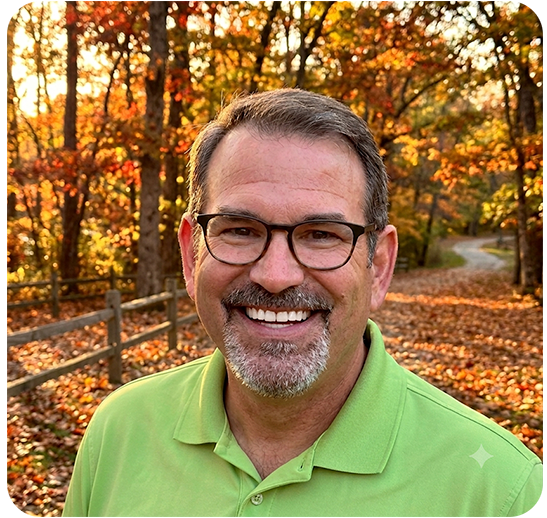
    Chuck is all about “building a relationship” with patients. And with every visit, he’s “a spiritual resource for the patient and family.” Chuck said, “There are lots of little or big ‘God’ moments he “feels privileged to be a part of.”  These times are often “joyful” as Chuck jokes and laugh with patients and families thanks to his humility, his good sense of humor and his ability to read the room.

    Veterans Recognition & Gift of a Day

    Veterans Recognition gatherings and the Gift of a Day program are two signature Crossroads initiatives Chuck embraces. One of his favorite Gifts of a Day was for a patient who was a Veteran and one of nine siblings who served in the United States Armed Forces. They had a memorable, outdoor ceremony and patriotic party.

    Then, there was the patient whose son was a chef in Chicago who came back to Cincinnati to produce a raucous Gift of a Day crab boil complete with live music. 

    Being a hospice Chaplain is “hard but rewarding,” according to Chuck. “It’s real life,” he said. “People let you share” their experience, complete with “all the vulnerabilities.”

    Chuck returns to EPC pulpits to fill in for pastors when they go on vacation. And when he’s not working he’s “reading, writing, listening to music and playing with” his seven, soon to be eight grandkids!

  • Savings Piggy

    Save a Recurring Portion of your Paycheck

    It’s Never Too Late to Start Saving!

    Set it up with your Bank

    Who doesn’t need a little help saving money? Did you know your bank can help? Most financial institutions allow you to create rules where portions of each of your paychecks are automatically deposited into separate accounts, such as checking, savings and money market accounts. 

    Systematically saving a portion of each paycheck is a highly recommended way to consistently save money over time.

    Savings Piggy

    Save a Recurring Portion of your Paycheck

    It’s Never Too Late to Start Saving!

    Set it up with your Bank

    Who doesn’t need a little help saving money? Did you know your bank can help? Most financial institutions allow you to create rules where portions of each of your paychecks are automatically deposited into separate accounts, such as checking, savings and money market accounts. 

    Systematically saving a portion of each paycheck is a highly recommended way to consistently save money over time.

    Here are some personal savings tips:

    Make Your Own Lunch

    Compare the cost of purchasing lunch supplies and a beverage at a grocery store versus buying a meal at the nearby deli or fast-food joint. This is one of the most tried and true ways to stretch your hard-earned money. And your homemade lunch is probably healthier too.

    Build an Emergency Fund

    Readily available money to cover three to six months of necessary expenses is the recommended amount for an emergency. Your funds should be easily available in an account you can access immediately without penalties.

    The 50-30-20 Budget Rule

    You might consider the 50-30-20 Budget Rule. Many Americans subscribe to it where 50 percent of your income goes toward “needs,” 30 percent to “wants” and 20 percent to “savings.”

    30-Day Savings Rule

    Other folks like the “30-Day Savings Rule.” Wait 30 days before making a non-essential or impulse purchase to think about whether you really want it. After 30 days if you’re still committed to the purchase, buy it. Or, after 30 days, you may decide to save the money instead of making a purchase.

    It’s never too late to increase your savings and improve your financial picture.

  • Path To More

    Temptations of Just My Imagination

    By Danny Gutknecht

    Right there, sitting at the Mayo Clinic in Rochester, Minnesota, across from one of the best neurologists in the world — a man who studies dream enactment and emotional processing during sleep — I couldn't focus.

    I knew I was stretching that day. I'd been filming for three days, conversing with doctors for an hour apiece, and I usually cut off around six sessions. But I wanted to fly home early, so I pushed it.

    Path To More

    Temptations of Just My Imagination

    By Danny Gutknecht

    Right there, sitting at the Mayo Clinic in Rochester, Minnesota, across from one of the best neurologists in the world — a man who studies dream enactment and emotional processing during sleep — I couldn't focus.

    I knew I was stretching that day. I'd been filming for three days, conversing with doctors for an hour apiece, and I usually cut off around six sessions. But I wanted to fly home early, so I pushed it.

    And here I was, losing working memory and attentional control while interviewing the person who studies dreams. In a sleep lab. Next to a bed that looked incredibly comfortable. I was awake and dreaming at once — images arriving on their own, thoughts assembling without me. Every fiber of my body wanted out. File it under strange stuff you can't make up.

    I went back to the hotel, skipped dinner, and fell asleep in my clothes. Later I learned that severe cognitive fatigue produces exactly this: wake-state instability, working-memory shutdown, vivid internal imagery, partial automatic functioning. The veil between waking and dreaming is thinner than we think. And it was that moment that started a much longer journey for me — discovering how real imagination really is. How seriously we take it unknowingly. How much we discard something just as real as waking life. It's just a different kind of real.

    The most surface-level imagination happens when we're trucking along, running our day, and we run into that person. You know the one. The toxic dissenter — the person you see down the hallway and you start looking for the first exit you can take to avoid them. Something about them gets under your skin; it exhausts you to have even one encounter. 

    One of my clients runs a billion-dollar division of a very large company. We'll call her Brenda. Brenda had this exact dilemma. One of her direct reports was one of those people who always drew attention to herself, drove the other leaders nuts, and seemed to have a chip on her shoulder. As Brenda was telling me about her, I asked, "Have you told her that every time you see her, you run the other way?"

    Brenda laughed. "Why in the world would I do that?"

    "Why wouldn't you? It's the truth."

    "I just really think she needs to go. She's constantly behind on her projects and doesn't provide backup to the other teams when they need it."

    I suggested Brenda go tell her why she runs the other way. I didn't think she would.

    The next week, Brenda was glowing the second we hopped on a call. "I had a conversation with Dayna and it was transformational. I told her that every time I saw her coming down the hallway, I ran the other way. That I'd grown so frustrated with her that even the loud ringtones on her phone annoyed the heck out of me." Dayna looked shocked. But then Dayna began to explain how she'd felt passed over for several roles, and how people had started treating her differently. Brenda explained that she was responsible for the performance of her site, and how Dayna's behavior made her feel — because the other team members were starting to notice.

    Over the next two weeks, Dayna began to improve. It didn't last. Eventually Brenda had to ask Dayna to leave the company. Brenda told me it was the best she'd ever felt about a situation like that. I asked why.

    "Because in the past, I just used to cut people out. And even though Dayna didn’t reciprocate when she left, I felt great. Those conversations did something for me, Danny. I feel a little more aware, early on, of the narratives and assumptions I make up in my head, that cause me a lot of internal strife. I listen to myself more closely, trust my gut, and make the encounter happen much sooner — so the situation doesn't have to get to that point."

    I asked, "What point?"

    "Well — all this time I thought Dayna was toxic. And to some extent she was. But I realized that by avoiding the conversation I needed to have — not necessarily to her, but with her, for myself — by the time it happened, I was toxic to Dayna."

    The thing about imagination is that this is a little one — the kind that happens every day, that we don't even think about. Not only writing our story but writing stories about someone else. Real stories, with real figures. It's not that they aren't real. Brenda's wasn't too far off; it was just missing something — the relationship between characters. We often forget to represent the other's story wholeheartedly when it lives only in our imagination. So, we can do that, or we can walk down the hall and find out. Either way, the story progresses instead of playing endless re-runs.

Vital Signs

This week's question:

Families and patients thank you, Who else knows what this work takes?
(Responses are anonymous and used to help improve the organization.)


WOW!

Why not recognize a coworker for a job well done?

Congratulate July’s WOW! Card recipients:

Cincinnati

Abbi Robertson, HL
Brian Huddleson, RN QRT
Chiffon Rachel, STNA
Chuck Testas, CH
Danielle Walker, STNA
Dawn Bradley, SW
Elizabeth Owusu-Korkor, HR
Elonah Davis, AN
Elysia Whitney, AN
John Reynolds, CH
Kirkland Kelly, STNA
Kourtney Spears, RNCM
Lindsey Seiber, RN QRT
Monti Thomas, TL
Olivia Hocker, RN QRT
Paula Heidel, RNCM
Sarah Croft, RNCM

Cleveland

Sheryl Rini, NP
Loretta Strowder, PR
Brooke McGuire, RNCM
Nicholas Zajdel, PR
George Parks, CH
Sydney Ruppel, HR
Hong Mon, Acct
Matt Baker, Recep
DeAesya Platt, LPN
Teena Orr, LPN
Jade James, LPN
Angelina Munoz, LPN
Nicholas Fenell, SSTL
Michael Small, CH
Mia Mendoza, SW

Dayton

Chiquita Berry, CD

Joe Hamman, Acct/HR

Brandy White, Reg Rep

Jack Thompson, BC

Caylin Holmes, RN CM

Aataya Berry, RN CM

Kelsey Williams, RN

Brandy White, Reg Rep

Cynthia Brooks, HL

Faith Richardson, DS LPN

Charise Madden, STNA

Rich Fitzwater, CH

Northeast Ohio

Alexis Woods, RN
Allysen Grimes, SW
Andrea Erb, BRV TL
Areol Dunlap, STNA
Asir Shamsuddin, STNA
Audra Milbrandt, PR
Ben White, PR
Brandon Utley, HR
Britney Zenallis, IC
Caitlin Ford, BC
Catherine Dolohanty, STNA
Chad Hinkle, HR
Chasity Thacker, LPN
Christine Wilson, SW
Cori Lake, RN
Crystal Dykes, TL
Dana Galletta, Billing
Dawn Withem, RN
Deanna Eder, SW
Deidre Schweitzer, RN
Dr. Mirhaidari, MD
Elyse Sikorski, BC
Emily Hathaway, IC
Haley Webb, Admin
Heather English, STNA
Heidi Jacks, STNA
Irina Grbic, STNA
Jackie Roby, RN
Jane Piehl, CH
Jennifer Cafarelli, RN
Jennifer Price, Billing
Jodi Burroughs, AED
Joe Hardin, STNA
Joslynn Mehteney, STNA
Judy VanCuren, NP
Julie Lang, RN
Kelly Fogel, PR
Kenna Peterson, SW
Kristen Stoker, LPN
Laura Browning, VM

Lori Hazel, TL

Luke Pantelis, LPN

Marissa Ruggiero, TL

Megan Cox, LPN

Megan Tupy, SW

Meighan Bohon, Admin

Melissa Murphy, TL

Michelle Abel, RN

Mike Burkhardt, SW

Nancy McKean, RN

Olivia Coontz, SW

Pat Slater, CH

Pierce Norman, SW

Raquel Ballard, Billing

Stacey Eisenhart, RN

Stephanie Huth, STNA

Suzanne Mineard, Reg Rep.

Taylor Lyke, RN

Taylor Smith, RN

Tempie Porter, MR

Tianna Mahaffey, STNA

Tiffany Shull, STNA

Tim Jensen, CH

Yadira Jensen, STNA

Philadelphia

Mary Kushner, RN
Sally Costello, RN
Edith Jallah, SW
Marlene Spivey, RN
Patrick Loughlin, SW
Beaunka Souriac, CNA
Leslie Gruenberg, LPN
Josh Hwang, CH
Ayona Geathers, LPN
Karen Poust, RN
Takira Adkins, CNA
Aisha Johnson, LPN
Pauline Yeanay, SW
Latoya Hunter, CNA
Lisa Keeney, RN
Laura Bonas, RN
Chantell Evans, CNA
Mary Wilkins, RN
Nicole Shear, SW
Christian Bennett, CH

Ideas, Comments, Questions?

Please provide us with your feedback using this form.